
Donald Trump's tariffs have shaken up the surfboard market
Its controversial trade policy forces its manufacturers to move from China to other parts of Asia, but they do not return to the United States.

Surfboard brands with factories in China are feeling the impact of US President Donald Trump's infamous move to raise tariffs on surfboards imported from that country in an effort to boost the local industry.
Starting September 1, all surfboards coming from China will have to pay 10% tariffs. Based on this, Sue Bowers executive at the head of Doyle Surfboards has decided to move the factory from China, Reuters news agency reported today.
The businesswoman is looking for factories in Vietnam or Thailand, however, rather than returning to the United States, which is what Trump wants. Bowers said she would like to return to production in her country and agrees with her president's protection of local industry, but that high labor costs and strict rules on environmental control make the price of her boards too high.
"There are too many things that need to change before we can get jobs back," Bowers said..
Critics from surfboard manufacturers say that if surfboards are to be built again in the epicenter of world surfing, California, the solution is not to raise tariffs on China, because what is happening is that factories, like Bowers', are moving to other Asian countries.
In fact, Kelly Slater's FireWire has been in Thailand since 2008.
According to data collected by Euromonitor International, salaries are half as high in Thailand and Vietnam than in China and 19 times lower than in the United States.
The Wavestorm, the one that started Jamie O'Brien's love affair with soft tops in 2012 (the one he surfed Pipe on), is made in Taiwan and sold at Costco for $99.
The number of imported tablets into the United States increased from 916.246 in 2018, nine times more than the 102.850 imported in 2004, when the United States began counting them.
According to a Reuters report, imported boards account for more than 90% of those sold in the country, of which 67% are Chinese.
Special coverage of the Paris 2024 Olympic Games on DUKE is presented by:








Related Notes:


DHD Shaper's Findings on What Surf Ranch Boards Should Look Like
The famous Darren Handley spent a week with several of his riders on the best artificial wave in the world and drew some important conclusions
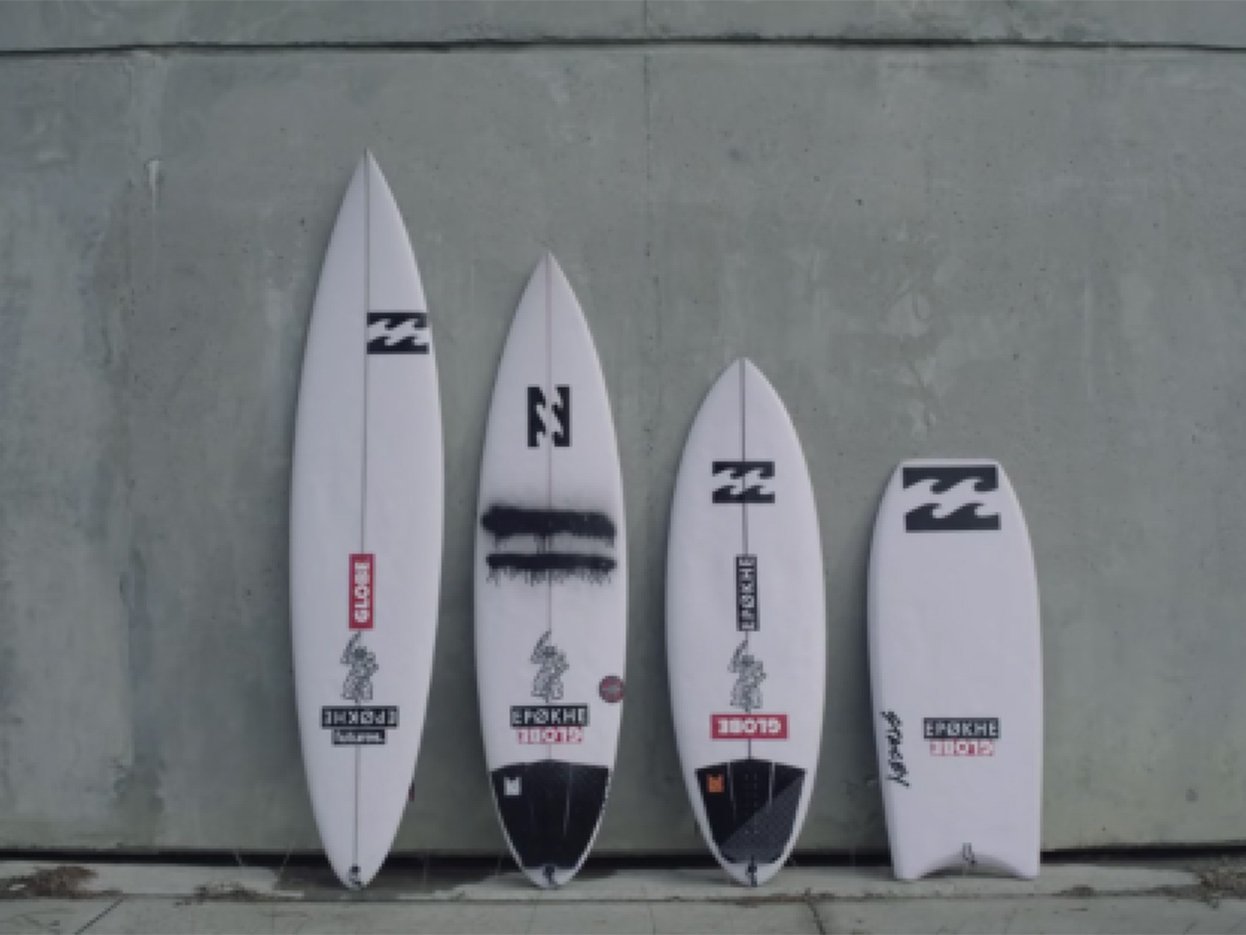
Four tables for four weeks
Dakoda Walters split a 4'0, a 5'0, a 6'0, and a 7'0, and that was all she wore for the month. Here's what happened


Uruguayan surfer re-elected president
Federico Deal will remain in charge of the Uruguayan Surfing Union for two more years


Bombs and split boards session at El Gringo
The second day of the event dawned a little bigger and a little heavier too
